Contacts 2.0 — Student Builder Access License
One person. Every app. A simpler way to stay connected.
Your relationships span text messages, email, WhatsApp, LinkedIn, Instagram, and more. Yet reaching one person can still require searching several apps, finding the right account, copying the same message, and checking separate conversations for a response.
Contacts 2.0 envisions a phonebook organized around the person you want to reach. Their connected identities, communication options, and relationship history come together in one place.
The Student Builder Access License gives undergraduate students access to the implementation plans and educational materials behind this vision. Explore how product strategy, technical architecture, and platform permissions shape a more connected communication experience.
The five features behind the vision
1. One unified profile per person
Bring a person’s phone numbers, email addresses, and authorized platform identities into one contact profile. Reduce duplicate records, scattered usernames, and uncertainty about which account belongs to whom.
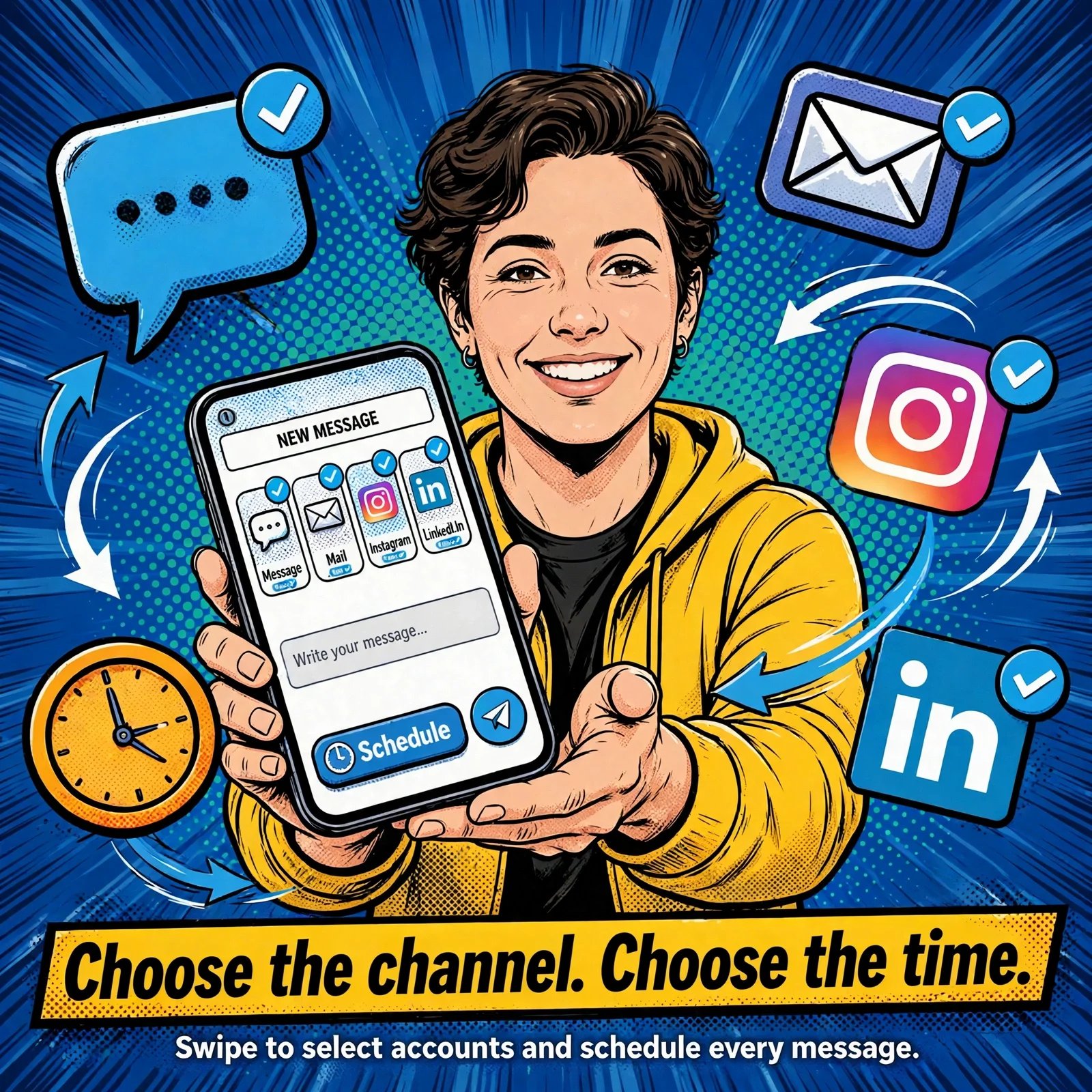
2. Prepare once. Reach across channels.
Compose a message and select your preferred channels without repeatedly starting from scratch. The proposed experience sends through authorized integrations where supported. When another app requires user action, it prepares the message for your review and completion.
3. Schedule each channel separately
Choose when each platform’s message should be sent or when you should receive a reminder to complete it. Coordinate follow-ups around the recipient’s time zone and your intended timing, rather than managing separate reminders across apps.
4. See the status each channel provides
Bring supported information about sent messages, delivery, reads, and replies into one view. Reduce the need to open every conversation to understand where a message reached someone. Unsupported or unknown status remains clearly identified.
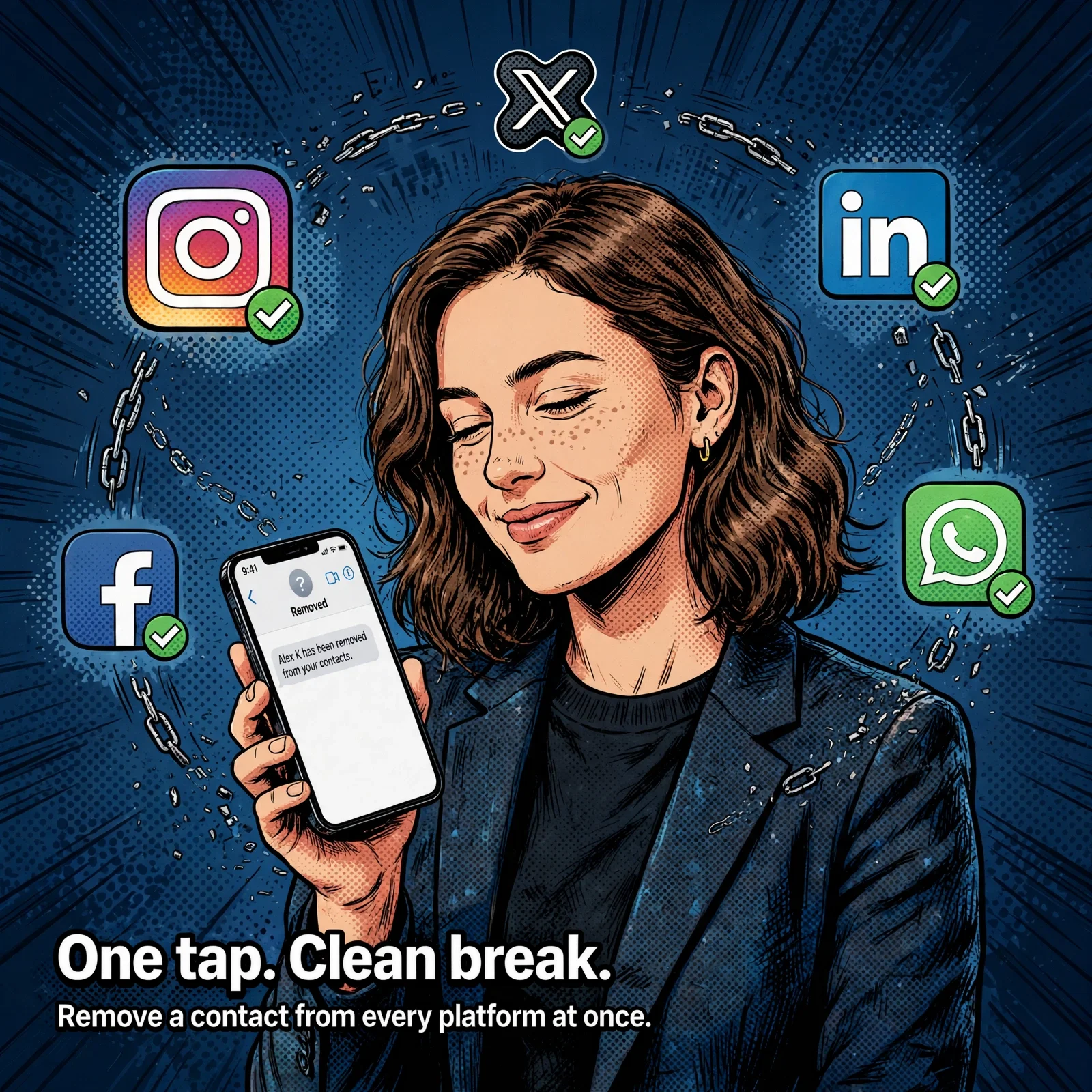
5. Manage digital boundaries with clearer removal controls
Review a person’s linked accounts and coordinate supported actions to unlink, block, unfollow, or remove them. See which steps are complete and which require action in another app, with the option to retain the base contact. Local removal does not erase another person’s messages or guarantee deletion across every service.
The problem Contacts 2.0 aims to solve
People maintain relationships across platforms, while each platform manages only its own part of the connection. The result is repeated searching, duplicate effort, fragmented follow-ups, uncertain message visibility, and tedious cleanup across individual accounts.
Contacts 2.0 proposes a communication layer within a phonebook or connected application that places the person at the center of the experience. Its vision is to help users spend less time navigating apps and more time communicating intentionally.
What you’ll explore
Implementation roadmaps for mobile, messaging, and enterprise platforms.
Unified identity mapping, system architecture, data models, and API design.
Message preparation, scheduling, status aggregation, and scoped removal.
Platform permissions, integration limits, and alternatives that require user confirmation.
Privacy, security, acceptance testing, and release planning.
Licensing models, illustrative budgets, customer adoption, and operational handover.
Detailed implementation lessons organized around preparation, execution, and verification.
Designed for undergraduate learning
Use the materials to support coursework, capstone research, product strategy exercises, entrepreneurship studies, and independent learning. Examine how an ambitious product vision becomes a practical delivery plan with defined capabilities, dependencies, and acceptance criteria.
What this purchase provides
This license grants one eligible undergraduate student access to review the included materials for personal educational use.
Ownership remains with the respective rights holders. This purchase does not transfer ownership of Contacts 2.0, patent rights, the demonstration application, or demo source files. Access does not grant permission to redistribute, resell, sublicense, or commercially exploit the materials or underlying technology.
The purchase provides educational and implementation planning materials. The features described represent the product vision. Their availability depends on the implementation, platform permissions, and applicable agreements. The purchase does not include a working messaging service across platforms, completed integrations, approvals from external providers, or guaranteed technical or business results.
Digital product. No physical item will be shipped.